The Design of a Baja Getaway: What Makes a Vacation Home Truly Special?
Two houses can have the same number of bedrooms, the same pool, the same beach distance and the same nightly rate — and produce completely different weeks.
Anyone who rents vacation homes regularly knows this and most people can't explain why. The answer is design: not decoration, but the dozens of decisions about orientation, flow, light, shade and materials that determine how a house actually feels to live in for seven days.
In Baja California Sur, those decisions matter more than almost anywhere, because the climate is demanding and the landscape is spectacular. Here's what separates a genuinely well-designed Baja home from a house with good photos.

1. Orientation: The Decision Everything Else Depends On
Which way a house faces is the single most consequential choice in Baja architecture, and it's the one you can't fix later.
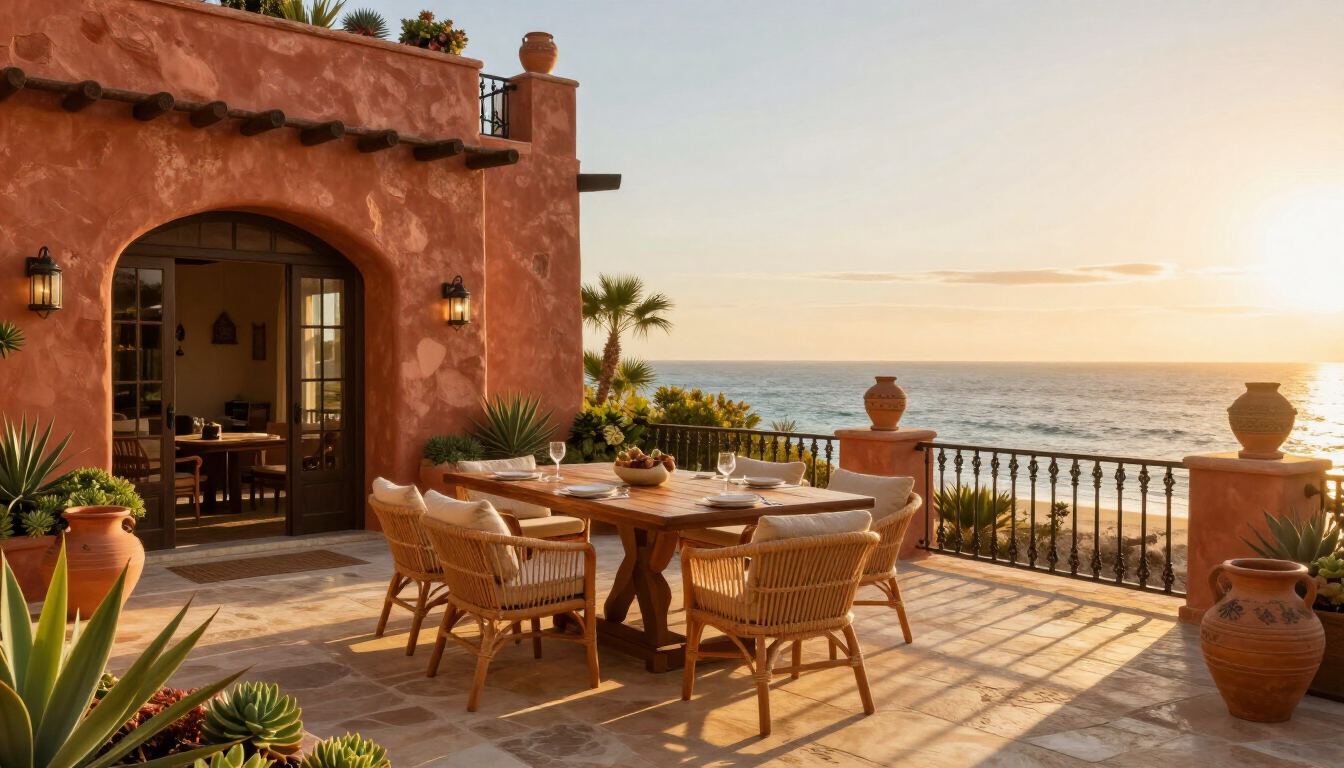
A west-facing terrace on the Pacific side gets the famous sunsets — and also the full force of afternoon heat in summer. An east-facing home on the Sea of Cortez side gets gentle morning light and shade by mid-afternoon, which in practice means the terrace is usable at 4 p.m. in June.
Well-designed Baja homes solve this with multiple outdoor zones facing different directions, so there's always somewhere comfortable to sit. Poorly designed ones give you one magnificent terrace you can only use for ninety minutes a day.
What to look for: more than one outdoor living area, and photos taken at different times of day.
2. Shade as Architecture, Not an Afterthought
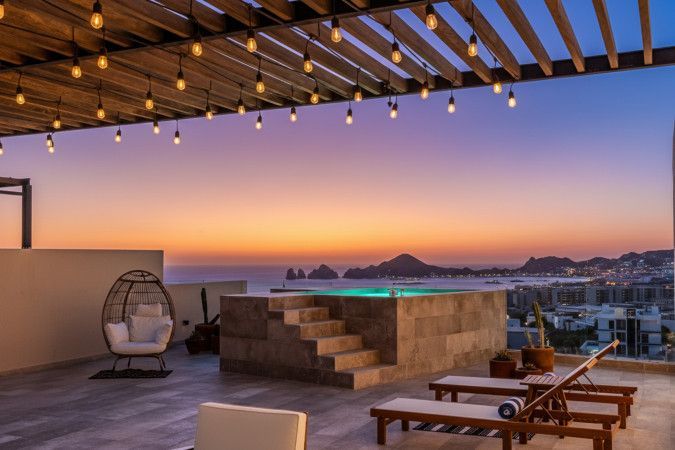
In a desert climate, shade is structural. The best homes here build it in: deep overhangs, pergolas, covered outdoor kitchens, interior courtyards, mature palms and trees placed where they'll do actual work.
An umbrella over a table is not shade design. A twelve-foot roof overhang that keeps the living room cool at 2 p.m. is.
What to look for: covered outdoor dining, a shaded section of the pool deck, and interior spaces that stay cool without running the AC at maximum all day.
3. The Indoor-Outdoor Threshold
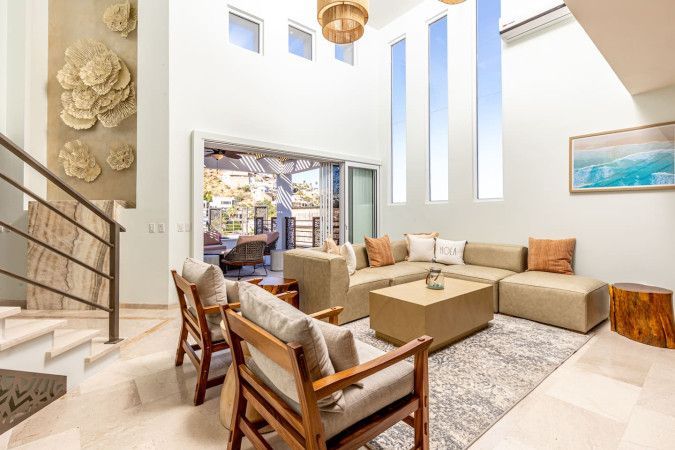
The best Baja homes are built around a simple ambition: erase the line between inside and outside.
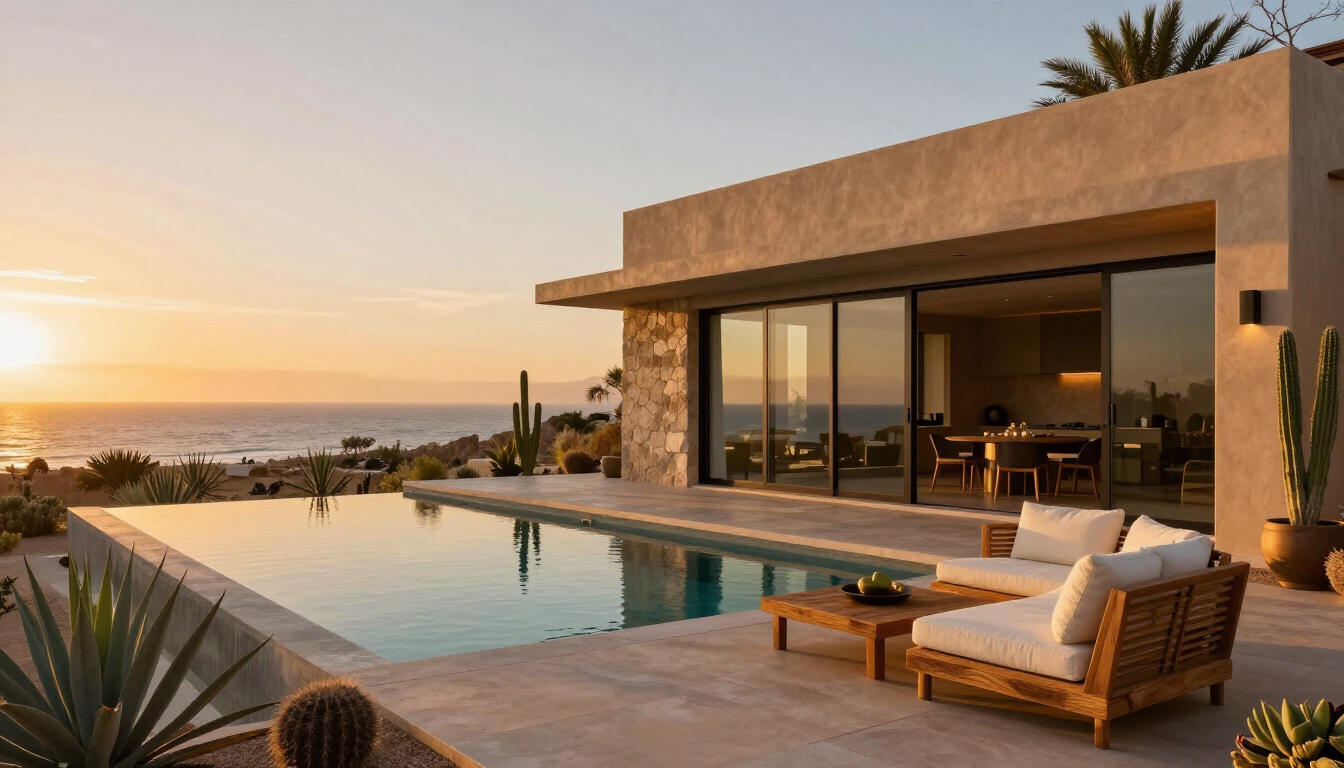
That shows up as sliding glass walls that fully retract, a single continuous floor material running from living room to terrace, and an outdoor kitchen that's a real kitchen rather than a grill on a slab.
When it's done right, you stop noticing which room you're in. When it's done poorly, you have a nice house with a nice patio and a door between them — and you'll use one or the other, never both at once.
What to look for: pocket or stacking doors, level transitions with no step down, and an outdoor dining table that seats everyone in your group.
4. The Pool Is Not Just a Pool
Three details separate a good Baja pool from an average one:
Depth and shape. A long, shallow pool is better for groups and families than a deep plunge pool, which is better for couples. Neither is "better" in the abstract — it depends on who's coming.
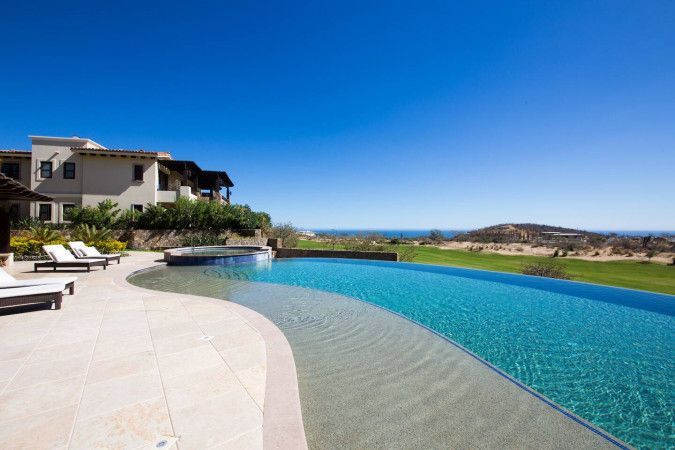
Shade on the deck. A pool with no shaded seating is unusable between noon and 4 p.m. for half the year.
The edge. An infinity edge aligned with the horizon is the shot everyone takes, but a pool positioned so the water, the terrace and the ocean read as one plane from the living room is doing something more valuable: it makes the whole house feel like it belongs to the view.

5. The Kitchen Decides How You Eat
This is the most underrated room in a vacation home.
A thoughtful kitchen — full-size refrigerator, real counter space, actual knives, enough glassware for the group, a dishwasher — means you'll shop the local markets, cook twice, and eat better than you would have at restaurants. A token kitchen with two pans and a mini fridge means you'll eat out eleven times and spend more money on worse food.
In Baja specifically, where the produce, seafood and local ingredients are superb, the kitchen is the difference between visiting the food culture and participating in it.
What to look for: oven, dishwasher, full-size fridge, and a kitchen that opens onto where people are actually sitting.
6. Materials That Belong to the Place
The homes that feel like Baja use Baja: local stone, chukum and stucco finishes, Parota and mesquite wood, hand-glazed talavera, palapa roofing, exposed beams, clay. Those materials also perform well — they handle heat, salt air and sun far better than imported alternatives.
The homes that feel generic could be in Florida, Dubai or Scottsdale. Glossy marble everywhere, imported furniture, no relationship to the landscape outside.
There's nothing wrong with contemporary minimalism, and plenty of excellent modern homes here do it beautifully. The question isn't old versus new — it's whether the house is in conversation with Baja or ignoring it.
7. The Details That Only Matter After Day Two
Any house photographs well. These are the things you only discover once you're living there:
- Real blackout curtains in bedrooms. Baja mornings are bright at 6 a.m.
- Quality mattresses and linens. The most expensive thing a bad vacation home steals from you is sleep.
- Reliable, fast Wi-Fi throughout the property, not just by the router.
- Functional outdoor lighting. Terraces are for evenings. A terrace you can't see at 9 p.m. is wasted.
- Water pressure and hot water that survive four people showering after the beach.
- Bug screens on anything that opens.
- Covered parking. A car that's been in direct Baja sun for six hours is a small daily misery.
8. The Part That Isn't Architecture
The best-designed house in Los Cabos can still produce a bad week if nobody answers the phone.
What actually makes a stay excellent is the combination of a well-built home and people who know it: staff who understand the property, a concierge who can arrange the chef, the charter or the airport pickup, pre-arrival stocking so you don't start your vacation at the supermarket, and someone reachable when the AC acts up on a Sunday.
That's why the collections worth booking are small. A manager overseeing two hundred listings cannot know any of them. A boutique operator with a curated portfolio knows which house has the better morning light and which one is quieter at night — and will tell you honestly when a home isn't right for your group.
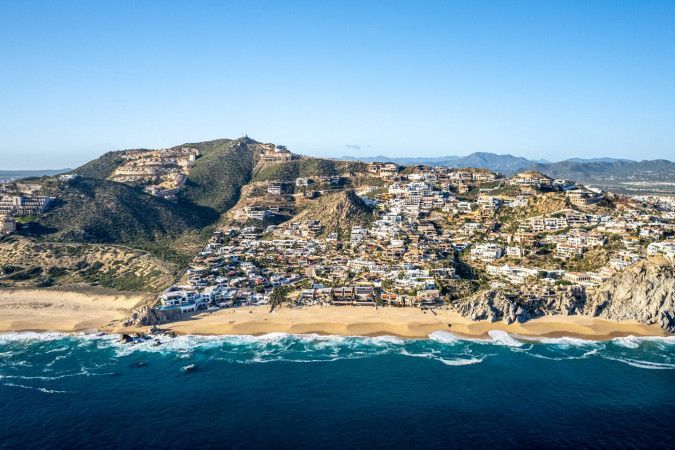
See how these choices play out in our homes: Casa Natalia — Pedregal, Cabo San Lucas — 4 bedrooms, sleeps 8. Newly built, a case study in indoor-outdoor living. Villa Alegria — Pedregal, Cabo San Lucas — 3 bedrooms, sleeps 6. Infinity pool aligned with the horizon, west-facing for sunsets. Casa Cactus — Cabo Bello, Tourist Corridor — 4 bedrooms, sleeps 8. Private pool, rooftop and ocean views.

A Short Checklist Before You Book
- Which direction does the main terrace face, and when is it in shade?
- Is there more than one outdoor living area?
- Does the kitchen let you actually cook for your group?
- Is the pool deck shaded for part of the day?
- How many people can sit at the outdoor table — everyone, or most?
- Is the beach in front swimmable, or for walking?
- What's included: housekeeping, concierge, stocking, transfers?
- Who do I call at 9 p.m. on a Saturday?
Any good operator will answer all eight without hesitating. If you can't get clear answers before you book, that's your answer.
Looking for a home that gets these details right? Browse our collection or tell us about your trip and we'll point you to the right one.
Frequently Asked Questions
What should I look for in a Baja vacation rental? Orientation and shade, multiple outdoor living areas, a genuinely functional kitchen, a pool deck with shade, quality beds and blackout curtains, reliable Wi-Fi and air conditioning, and a responsive local management team. Photos tell you about the finishes; these details tell you about the week.
Does the direction a vacation home faces really matter in Los Cabos? Significantly. West-facing terraces deliver sunsets but take the full afternoon heat; east-facing homes get soft morning light and earlier shade. The best homes have outdoor areas facing more than one direction so there's always a comfortable place to sit.
What is a palapa and why do Baja homes have them? A palapa is an open-sided structure with a roof of dried palm leaves. It's traditional across coastal Mexico and genuinely effective: it creates deep shade while letting heat escape, which keeps the space under it noticeably cooler than a solid roof.
Is a private chef worth it in Los Cabos? For groups and special occasions, usually yes — rates are far more accessible than in the US or Europe, and a chef using local seafood and produce in your own kitchen tends to beat a restaurant meal. Most boutique operators, including us, can arrange it with notice.